


Creativity Unmasked
JOURNAL
Creativity does not ask the mind to become perfect. It asks for an opening — a surface to move through, a body willing to surrender.

Creativity can arrive through beauty, but it can also arrive through instability. Through thoughts that run rampant. Through fury that needs movement. Through depression that turns inward. Through shame that asks to be brought to the surface.
In Megan Ashman's work, creativity is not decoration. It is an energy — alive, instinctual, and available when the self loosens its grip.
To create is to give the unseen a way to exist. The canvas becomes a place where disarray can be released without becoming destruction.
Ashman's process begins with surrender — not passivity, but the choice to stop forcing the image into logic and allow something stranger to take the lead.
In her journal, she writes:
"My creativity breeds from instability. When thoughts run rampant, inspiration awakens. The fire burns inside. Fury provokes the flame. I thrive through suffering. My mind flourishes when the madness remains."
That passage holds the center of the work. Creativity is not tidy inspiration. It is pressure, fire, contradiction, and release. The artist is not waiting for peace before making something meaningful. She is allowing the unstable material of inner life to become form.

Creativity begins where control loosens. The artist does not always command the image. Sometimes the image arrives.
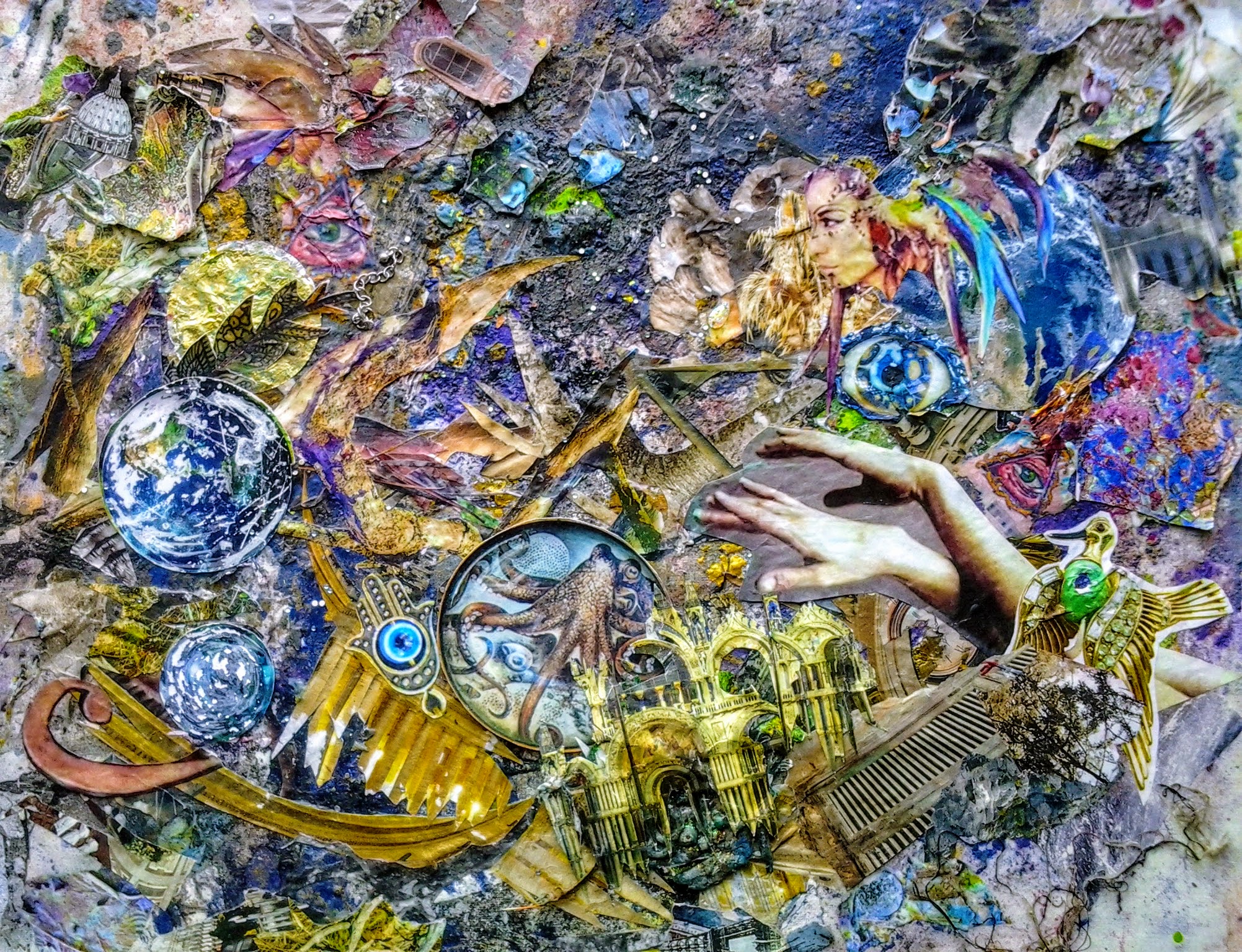
My creativity breeds from instability. When thoughts run rampant, inspiration awakens — grand reflections from intense emotions. The fire burns inside.
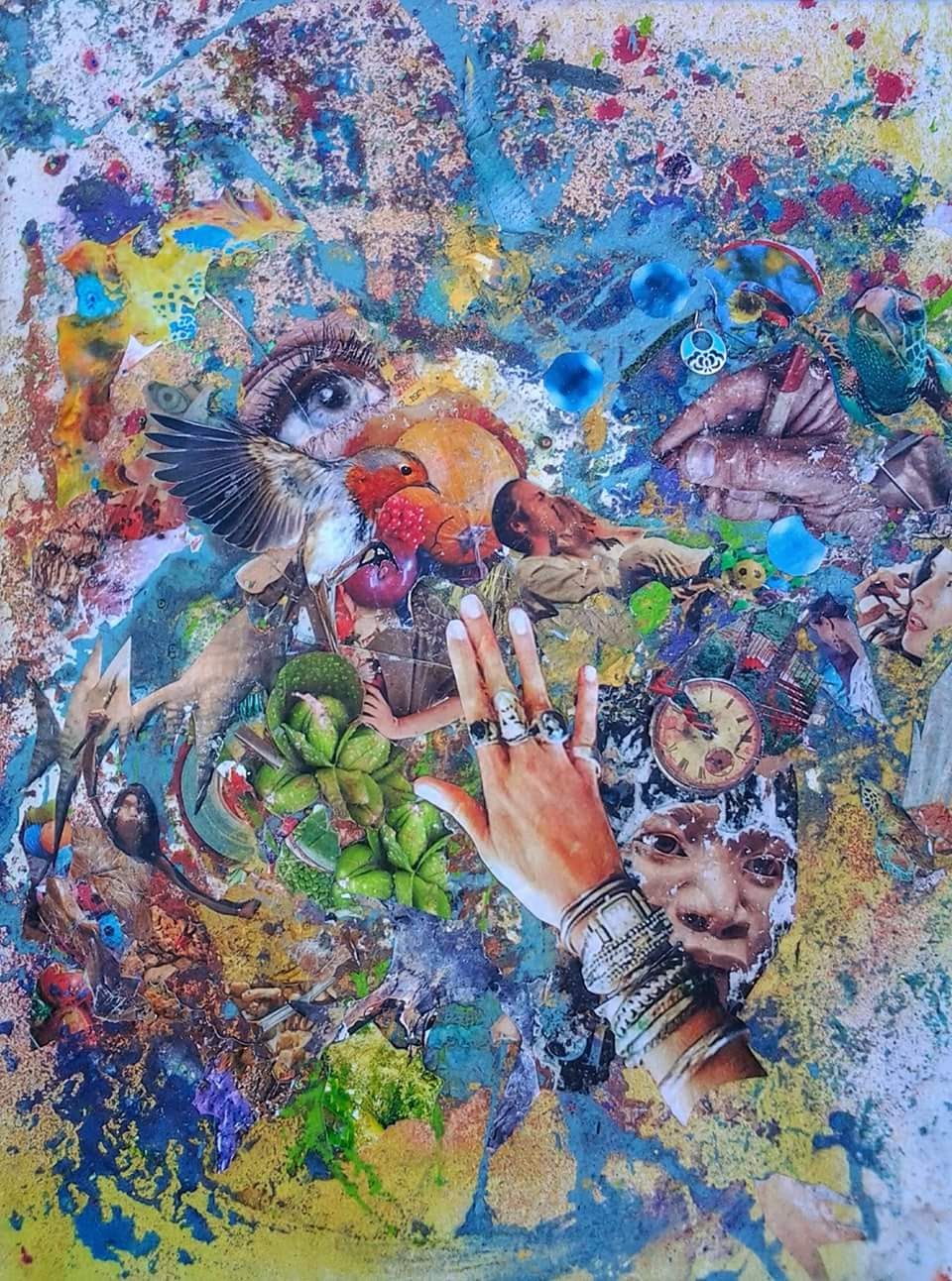
Phantasmagorism becomes a creative state. Paint spills, breaks apart, reforms. Collage interrupts the surface like memory entering the present. The work is not assembled from a fixed plan. It is discovered through the act of making.
Depression may bring introspection. Fury may bring movement. Shame may ask for inclusion. The difficult emotion is not erased. It is changed by being given form. A violent feeling becomes color. A restless thought becomes texture. The painting receives what the mind cannot keep carrying.