top of page

JOURNAL

Creativity Unmasked

Creativity is not always calm. Sometimes it arrives as unrest, fury, pressure, hunger, shame, longing, or a thought moving too quickly to be understood. The creative spirit does not ask the mind to become perfect before it begins. It asks for an opening — a place to enter, a surface to move through, a body willing to surrender.

Creativity is a gift, but it is not always gentle.

It can come through beauty, wonder, stillness, and love, but it can also arrive through instability. Through the thoughts that run rampant. Through fury that needs movement. Through depression that turns inward and begins searching the dark. Through shame that asks not to be buried, but brought to the surface and integrated. In Megan Ashman’s work, creativity is not treated as decoration or talent alone. It is an energy — something alive, instinctual, and available when the self is willing to loosen its grip.

To create is to give the unseen a way to exist. The canvas becomes a place where disarray can be released without becoming destruction, where tribulation can be redirected into meaning, where the subconscious can unmask itself through color, texture, image, symbol, and reverie.

Creativity begins where control loosens. These works move through instinct, emotion, disorder, curiosity, and the subconscious force that rises when logic can no longer hold everything in place. The artist does not always command the image. Sometimes the image arrives.
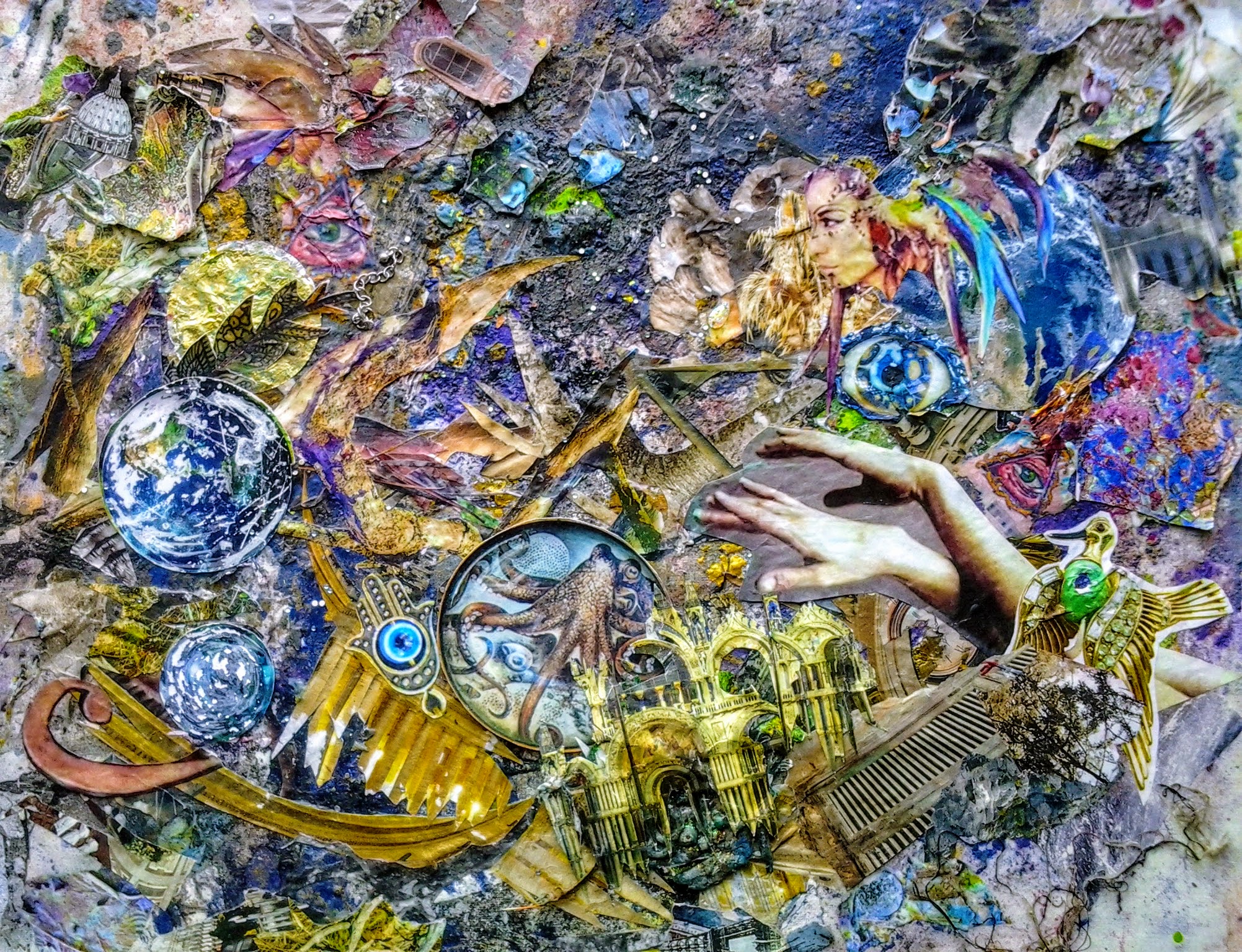
Ashman’s creative process begins with surrender. Not passive surrender, but active surrender — the choice to stop forcing the image into logic and allow something stranger, deeper, and more instinctive to take the lead. The mind is invited to step outside ordinary order. Impossible notions are entertained. Curiosity becomes a method. Instability becomes momentum.

In her artist journal, Ashman writes:

“My creativity breeds from instability. When thoughts run rampant, inspiration awakens — grand reflections from intense emotions. The fire burns inside. Fury provokes the flame, burning brighter. My ideas ignite: an insanity of introspection, an enigma of satisfaction. I thrive through suffering. My sense of self hides when I am sane. This place I love calls to equal parts pain, yet inside I am happy, for my mind only flourishes when the madness remains.”

That passage holds the emotional center of the work. It does not present creativity as tidy inspiration. It presents creativity as pressure, fire, contradiction, and release. The artist is not waiting for perfect peace before making something meaningful. She is allowing the unstable material of the inner life to become the beginning of form.

This is where Phantasmagorism becomes more than a visual style. It becomes a creative state. The painting is built from movement, trance, accident, intuition, and emotional charge. Paint spills, stains, breaks apart, and reforms. Collage interrupts the surface like memory entering the present. Found objects carry private histories. Texture rises into terrain. Metallic pigments catch light like brief messages from another realm. The work is not assembled from a fixed plan. It is discovered through the act of making.

That discovery matters. In Ashman’s world, creativity is not only self-expression; it is self-revelation. The artist does not enter the process already knowing what the painting means. Meaning emerges through contact. Through repetition. Through mistakes that become necessary. Through images that appear later, as if they had been waiting beneath the surface all along.

This is why the subconscious is central to the work. The creative mind is allowed to become porous. Thoughts, emotions, memories, symbols, fears, desires, and fragments begin to move without needing immediate explanation. The image becomes a realm of reverie — not separate from reality, but deeper than the version of reality the conscious mind can easily name.

My creativity breeds from instability. When thoughts run rampant, inspiration awakens — grand reflections from intense emotions. The fire burns inside.
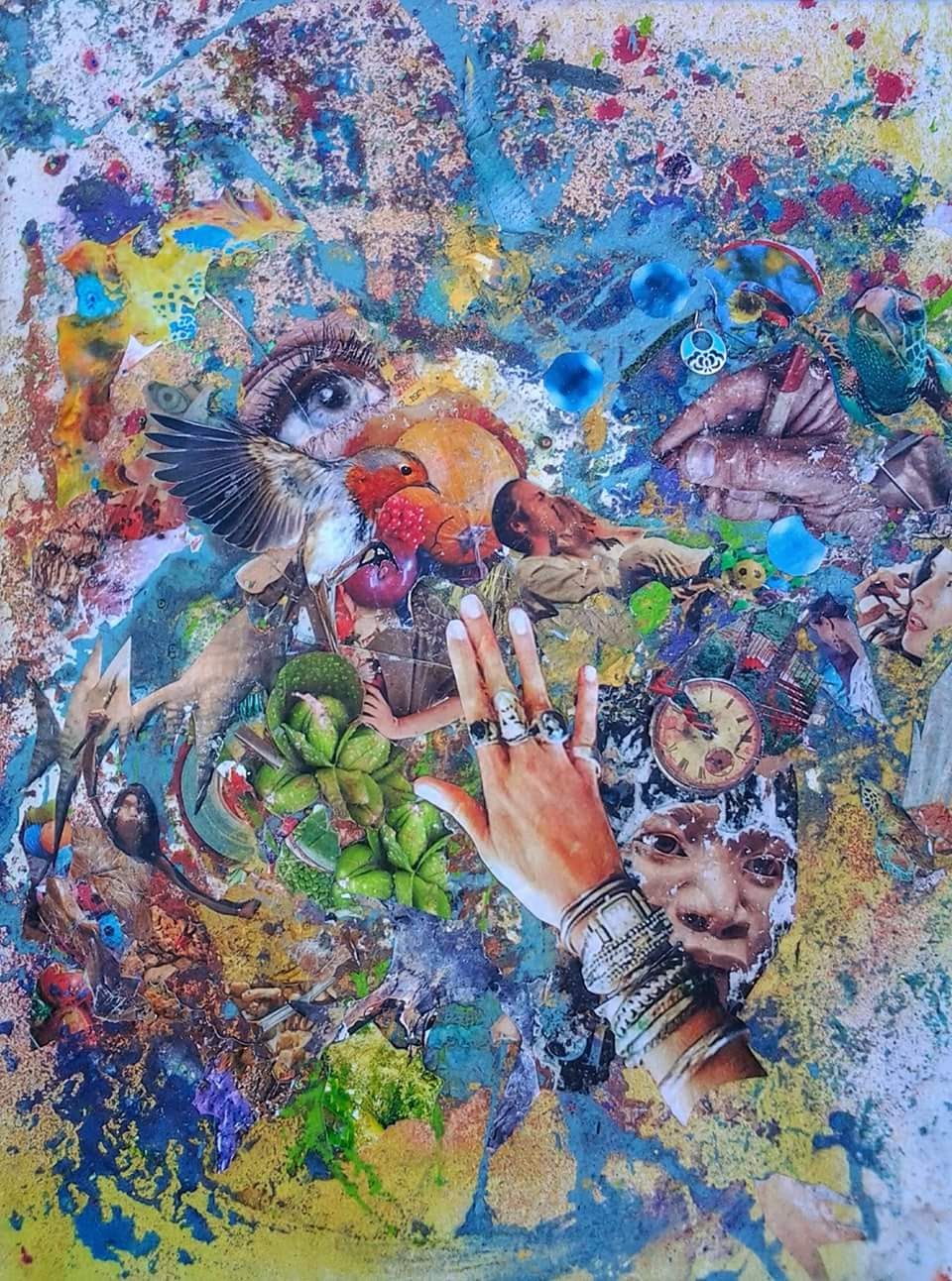
The power to overcome can be found through creativity, but not because art makes suffering beautiful in a simple way. It is more complicated than that. Depression may bring introspection. Fury may bring movement. Shame may ask for inclusion. Unrest may ask for integration. Rumination may need redirection. The difficult emotion is not erased; it is changed by being given form.

This is the alchemy inside the work. A violent feeling becomes color. A restless thought becomes texture. A hidden fear becomes a figure half-visible in the surface. A memory becomes a room, a storm, a face, a wound of light. The painting receives what the mind cannot keep carrying in its original shape.

There is something almost devotional in that act. Creativity becomes an invitation to co-creation — with the subconscious, with the materials, with chance, with whatever force moves through the artist when ordinary thinking falls away. The artist brings the hand, the history, the body, the wound, the willingness. The image brings its own intelligence.

Maybe this is what it means to unmask creativity: not to make the self prettier, simpler, or more acceptable, but to let the hidden self speak in a language older than explanation. To release disarray onto the canvas and watch it become atmosphere. To enter the surreal reverie and allow it to lead. To discover that even instability can carry a strange kind of grace when it is given somewhere sacred to go.

bottom of page